HistorianGenealogistStorykeeper

Every family has a history worth preserving.

Dr. Carolyn Haliburton Carter helps individuals, families, institutions and communities uncover the records, memories and stories that connect the past to the present.

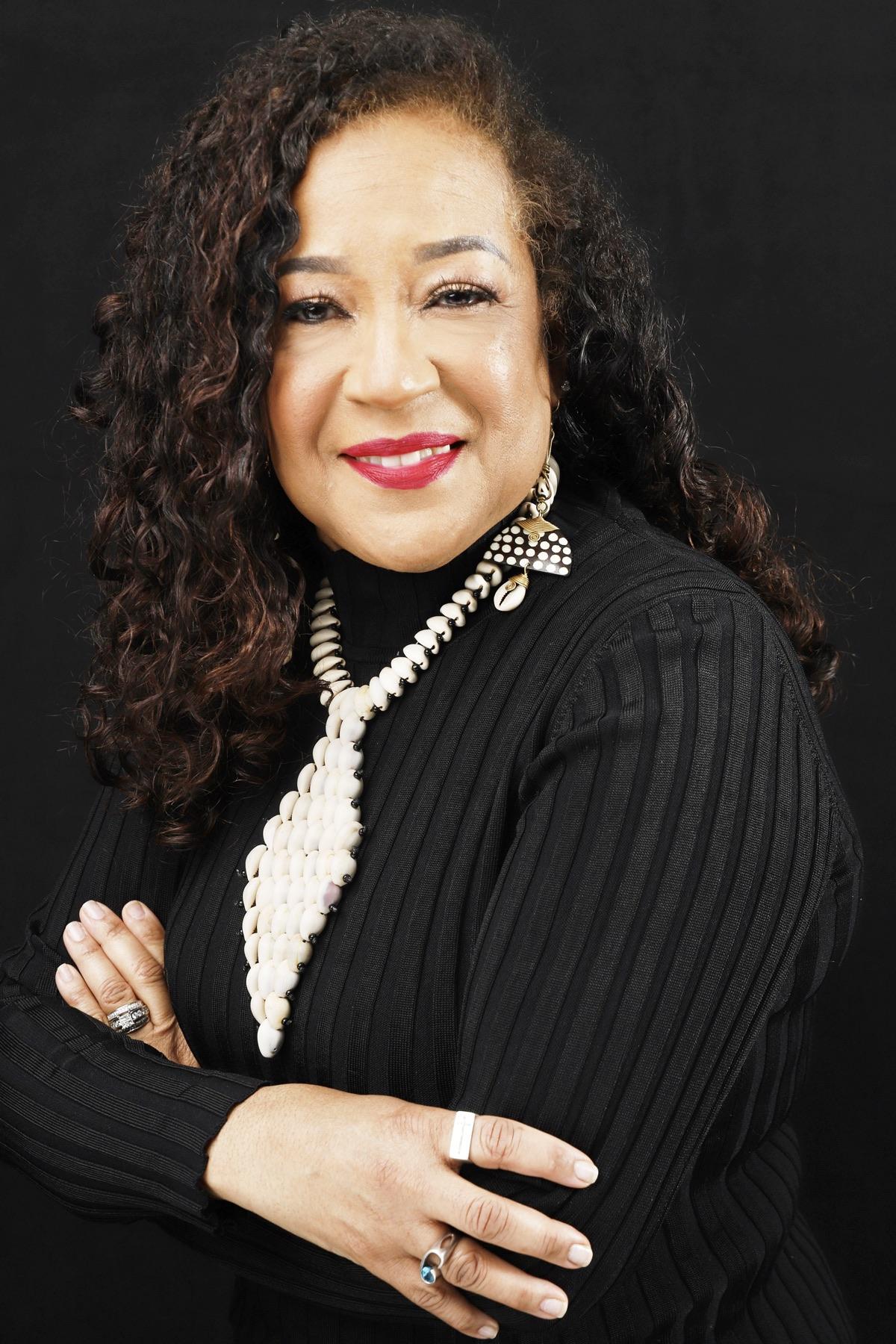
Dr. Carolyn Haliburton Carter, historian and professional genealogist, photographed against a dark ground wearing a cowrie shell necklace.

“I am the hopes and dreams of my ancestors.”

Dr. Carolyn Haliburton Carter

Introduction

Preserving the stories that history cannot afford to lose

Dr. Carter works as a historian, professional genealogist, archivist, storyteller and educator — four decades of questions that began at a kitchen table and led into county courthouses, state archives and the National Archives.

Dr. Carter's exploratory approach to researching family history starts from the known and moves toward the unknown. She brings more than twenty years of collaborative conservation of historical knowledge and records research, with a focus on preservation, transcribing and abstracting original material, cataloging, and the analysis of problems and evidence.

She is experienced in documenting primary and secondary sources and citing them accurately — compiling a proof argument, summarizing a case study, and completing written reports. She works from original sources: birth and death certificates, wills, probate records, census records, draft registrations, military and church records, land records and deeds.

Her method joins documentary evidence, archival research, oral history and community memory. One without the others tells only part of a family’s story.

Storykeepers Heritage Network, LLC — Learning from the Past, Building the Future.

Also from Dr. Carter

Dr. Carter is Executive Director of Storykeepers Heritage Network, LLC, through which she leads historical research, documentary production, genealogy education and heritage consulting.

Areas of expertise

The disciplines behind the work

Genealogy done properly draws on several distinct crafts. These are the ones Dr. Carter practices, teaches and has been engaged for.
  • Family History Research

    Building a documented lineage from original sources — vital records, census returns, wills, probate files, deeds, church and military records — and moving outward from what a family already knows toward what it does not.

  • African American Genealogy

    Research that continues past the 1870 census wall, using slave records, enslavers' papers, plantation and county records, and the friends, associates and neighbors who surrounded a family.

  • Archival Research

    On-site work in national, state and county repositories, from the Family History Library and the National Archives to the Tennessee, Ohio, Michigan and North Carolina archives.

  • Oral History

    Recording, transcribing and archiving family and community testimony to professional standards — the discipline behind her Master's concentration in public and oral history.

  • Historical Documentation

    Transcribing and abstracting original material, citing sources accurately, compiling a proof argument and delivering a written report a family can rely on and pass down.

  • Historic Preservation

    Identifying, evaluating and recommending properties for historic designation, including National Park Service Network to Freedom Underground Railroad applications and City of Detroit local designations.

  • Genealogy Education

    More than a decade teaching Beginning Genealogy at Wayne County Community College District, with continuing-education workshops and a student genealogy club she led as faculty adviser.

  • Lectures and Workshops

    Sessions for colleges, libraries, museums, sororities, churches, civic bodies and family reunions — including narrated historic bus tours of Detroit's Underground Railroad.

Services

How Dr. Carter works with families and institutions

Research engagements are scoped individually. Fees are discussed directly — there is no package to pick from before the question is understood.

The Kitchen Genealogist

Where family stories become family history

The kitchen table is where families have always done this work. It is where an aunt corrects a date, where a photograph comes out of an envelope and somebody finally puts a name to the face at the back, and where a child hears a story that will still be with them fifty years later.

Dr. Carter’s own research began at that table, in 1985, with a tape recorder and two women who remembered further back than anyone else in the family — her grandmother and her great-grandmother.

Those conversations are not a warm-up to the real work. They are the first source. What is said at the table sets the questions the records are then asked to answer: a remembered county, a misspelled surname, a brother nobody could account for. The archive tests the story; the story tells the archive where to look.

What gets passed across it

  • Names
  • Memories
  • Recipes
  • Photographs
  • Family legends
  • Questions
  • Stories that were never written down

Every one of these is a research lead. Bring them to a consultation — even the ones you are not sure are true.

Featured work

Research that changed the record

Designations secured, collections digitized, communities taught to research their own families. Each of these is documented in Dr. Carter's published account of her work.
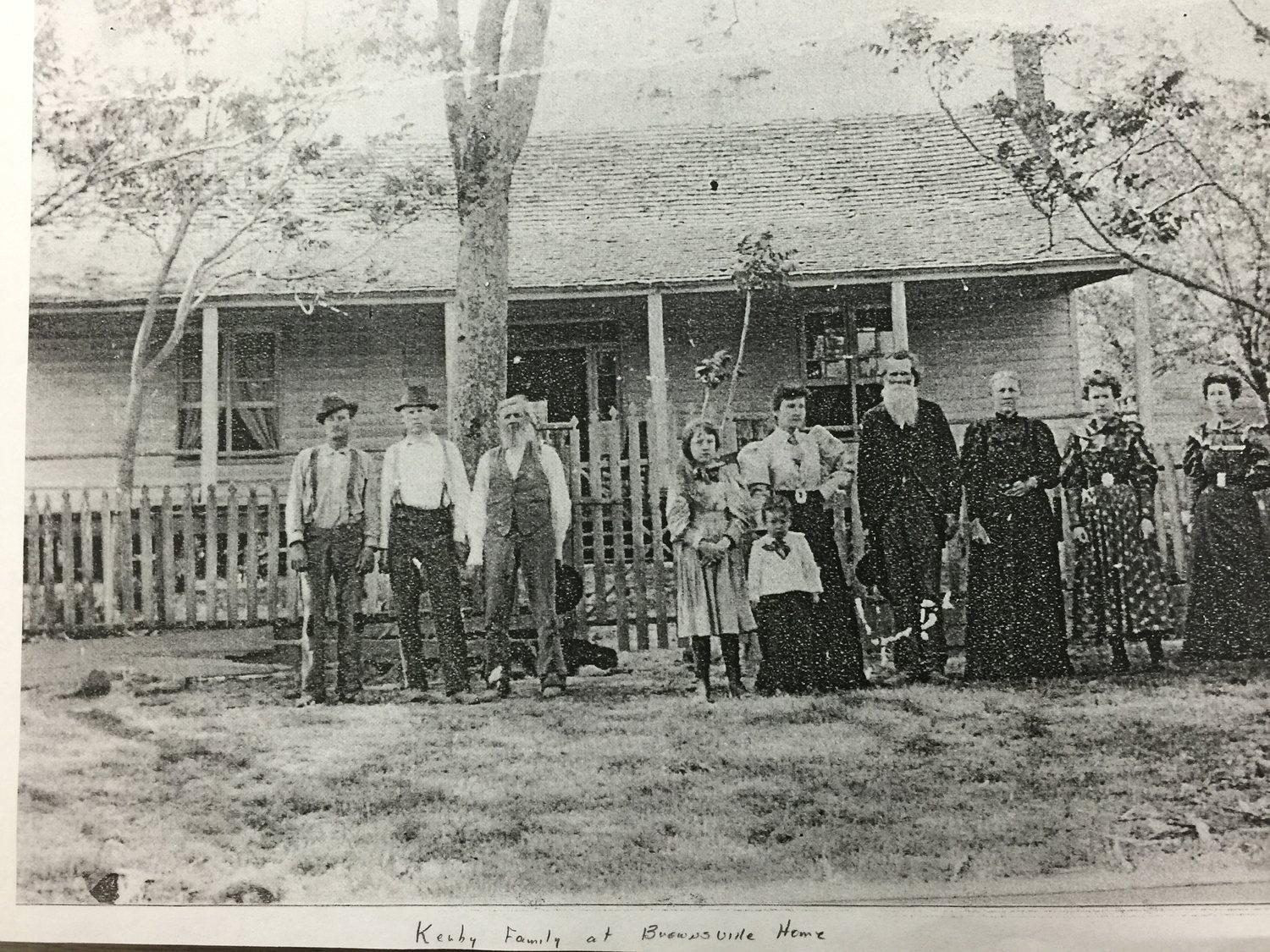
  • A copy photograph of a late nineteenth-century family group standing outside a timber house behind a picket fence, captioned in handwriting “Kerby Family at Brownsville Home”.

    “Kerby Family at Brownsville Home” — a copy of the surviving family photograph, spelled as written on the original.

    Family history research

    Kirby DNA: tracing a line through genetic evidence

    Research into the Kirby line, one of the family lines Dr. Carter descends from, combining documentary evidence with DNA testing. Genetic matching has connected her to relatives on the Christopher branch of the line, including a cousin in Ireland, and to the surviving photographic record of the family at their Brownsville home in Haywood County, Tennessee.

    Role
    Researcher and descendant
    Outcome
    Documentary and genetic evidence carried the line back into the late eighteenth century, alongside the Currie research in the same Tennessee county.
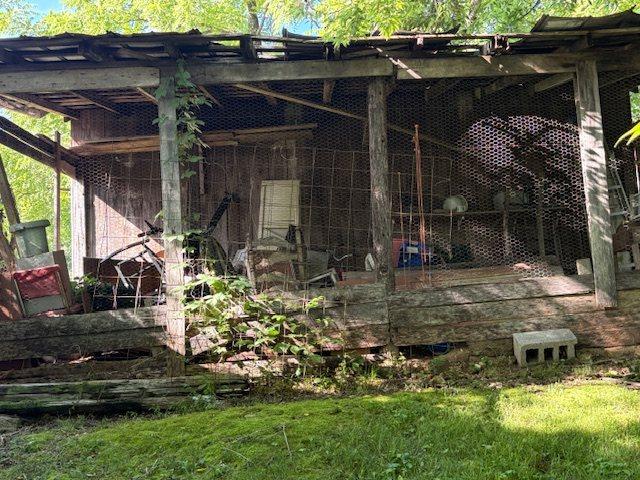
  • The remains of a timber outbuilding, roof partly collapsed and the structure overgrown, photographed in summer.

    What survives of Charles Whiteside’s house, photographed some ninety years on.

    Family history research

    The Whiteside plantation and Charles A. Whiteside

    Research into the Whiteside line and the plantation on which her ancestors were enslaved, following Charles A. Whiteside from bondage into work as a blacksmith. The surviving fabric was documented on site: the house, the church he built, the church where his wife was the only Black woman member, the original bench, and the enslaver’s gravesite.

    Role
    Researcher, descendant and author
    Outcome
    Published as “From Bondage to Blacksmith: The Unbreakable Spirit of Charles A. Whiteside” by the Tennessee Genealogical Society.
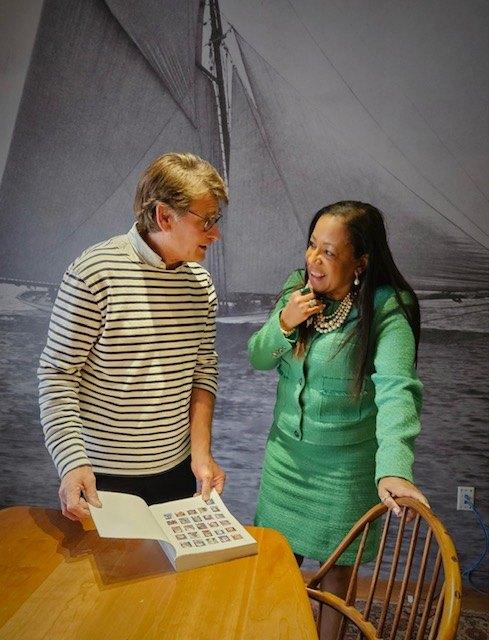
  • Dr. Carolyn Haliburton Carter and Paul Elias standing at a table, turning the pages of a large album together, in a room hung with a photograph of a sailing ship.

    With Paul Elias, three-times great-grandson of John Murray Forbes, going through the family record in Boston.

    Underground Railroad

    The Forbes family and the Underground Railroad

    Research into John Murray Forbes and the Forbes family’s part in the Underground Railroad and the antislavery movement, prepared and presented in Boston, working with Paul Elias, three-times great-grandson of John Murray Forbes.

    Role
    Researcher and presenter
    Period
    Boston, April 2024
    Outcome
    Presented as the Forbes Family / John Murray Forbes Underground Railroad presentation, Boston, April 2024.
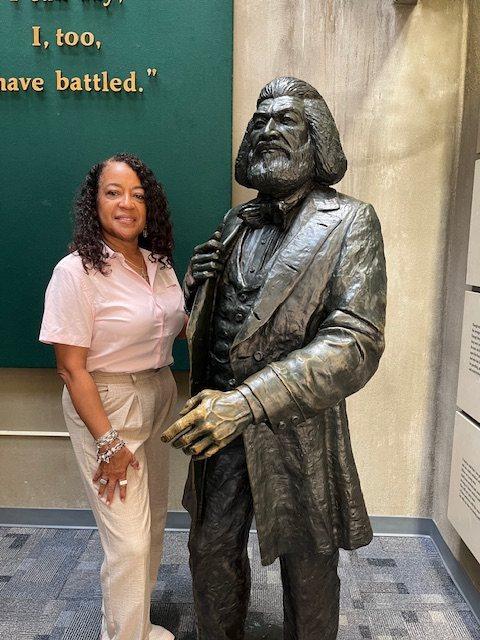
  • Dr. Carolyn Haliburton Carter standing beside a life-size bronze statue of Frederick Douglass, below a wall bearing the words “I, too, have battled”.

    Beside the Frederick Douglass statue, under his own words: “I, too, have battled.”

    Underground Railroad

    Frederick Douglass in Anacostia and in Detroit

    Research following Frederick Douglass between the two cities that frame Dr. Carter’s own work: Washington, D.C., where she served as a Civil Rights Historian for the National Park Service in the National Capital Region, and Detroit, where Douglass spoke and where the Underground Railroad crossed the river into Canada.

    Role
    Researcher
    Outcome
    Site and collection research supporting her writing on emancipation in Washington, D.C.
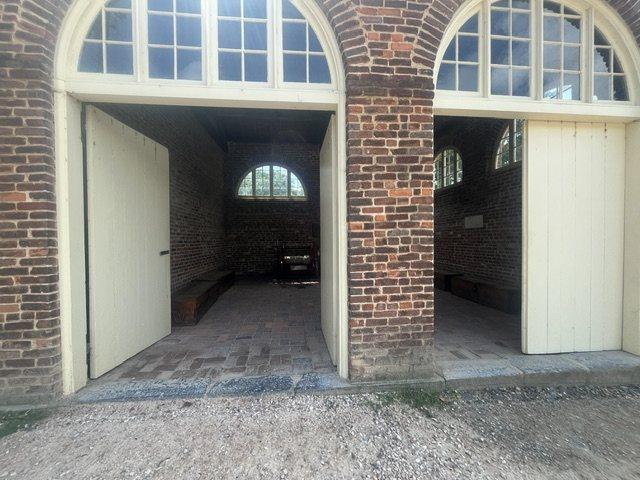
  • The brick engine house at Harpers Ferry known as John Brown’s Fort, its arched doorways standing open onto a brick floor.

    John Brown’s Fort — the armoury engine house at Harpers Ferry, where the raid of October 1859 ended.

    Underground Railroad

    John Brown and Harpers Ferry

    Site research at Harpers Ferry, where John Brown’s raid of October 1859 ended in the armoury engine house, and in the collections that hold the contemporary record of those days.

    Role
    Researcher
    Outcome
    Site documentation supporting her Underground Railroad research and public programs.
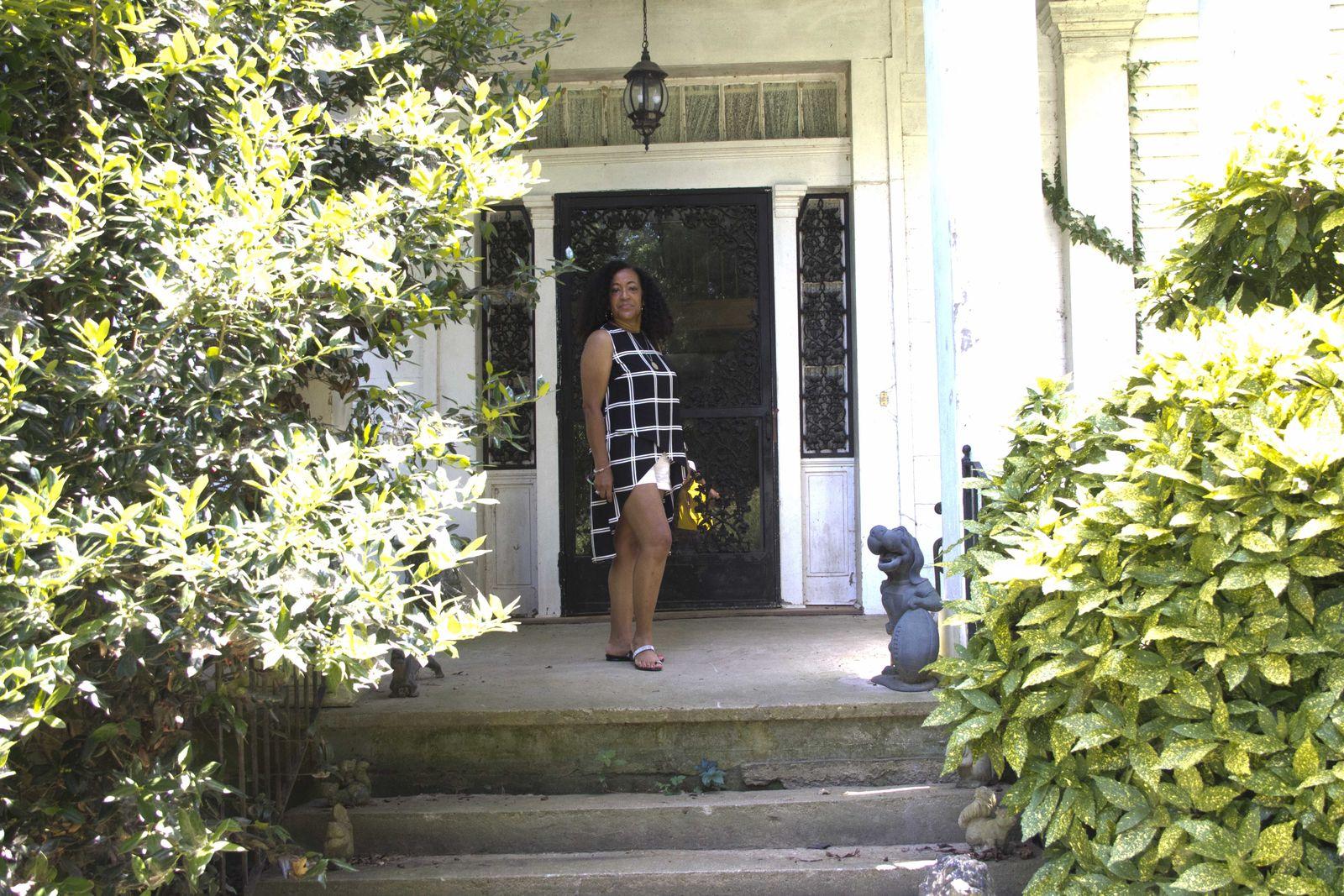
  • Dr. Carolyn Haliburton Carter standing at the front door of the Currie/Curry plantation house in Haywood County, Tennessee.

    On the porch of the Currie/Curry plantation house, Haywood County, Tennessee.

    Personal ancestral research

    The Currie/Curry Plantation, Haywood County, Tennessee

    Walking in the footsteps of her maternal ancestors at the plantation where they lived, worked and died, and connecting with the descendants of the family that enslaved them.

    Role
    Researcher and descendant
    Outcome
    Maternal lineage traced to the late 1700s and recorded in the family history book she compiles every five years.

Speaking and education

Bringing history into the room

Dr. Carter has taught genealogy for more than a decade and presented for universities, libraries, conferences, churches, sororities and civic bodies — including narrated historic bus tours of Detroit's Underground Railroad.

Audiences she has presented to

  • Colleges and universities
  • Libraries and archives
  • Museums and historical societies
  • Schools and educational programs
  • Churches and faith communities
  • Sororities and civic organizations
  • Community organizations
  • Family reunions

Media and recognition

In print, on air, on the record

Interviews, features and appearances on African American genealogy, the emotional weight of ancestral research, and the preservation of Detroit's Black history.

“I am the hopes and dreams of my ancestors.”

Dr. Carolyn Haliburton Carter

The process

How a research engagement works

  1. 01

    Share your question

    Tell Dr. Carter what you already know and what you hope to discover — a name, a photograph, a story you were told, or years of accumulated notes. Everything starts from the known and moves toward the unknown.

  2. 02

    Define the research scope

    Together you clarify the people, places, time periods and record groups involved, and agree what the research is setting out to establish. A defined question is what makes an answer possible.

  3. 03

    Research and documentation

    Archives, databases, historical records and oral sources are examined and weighed. Original records are transcribed and cited, conflicting evidence is analyzed, and a proof argument is compiled.

  4. 04

    Receive your findings

    The research is organized and presented in the format agreed at the outset — with the sources it rests on, and a clear account of the questions that remain open.

Research findings cannot be guaranteed. Historical records are often incomplete, damaged, restricted, missing or contradictory — particularly for families whose lines run through enslavement. What can be promised is careful work, honest reasoning, and a clear account of what the surviving evidence does and does not support.

Your family’s story is waiting to be discovered.

Whether you are beginning with a name, a photograph, a family story or years of research, Dr. Carter can help you determine the next step.

Or email her directly: thekitchengenealogist@gmail.com